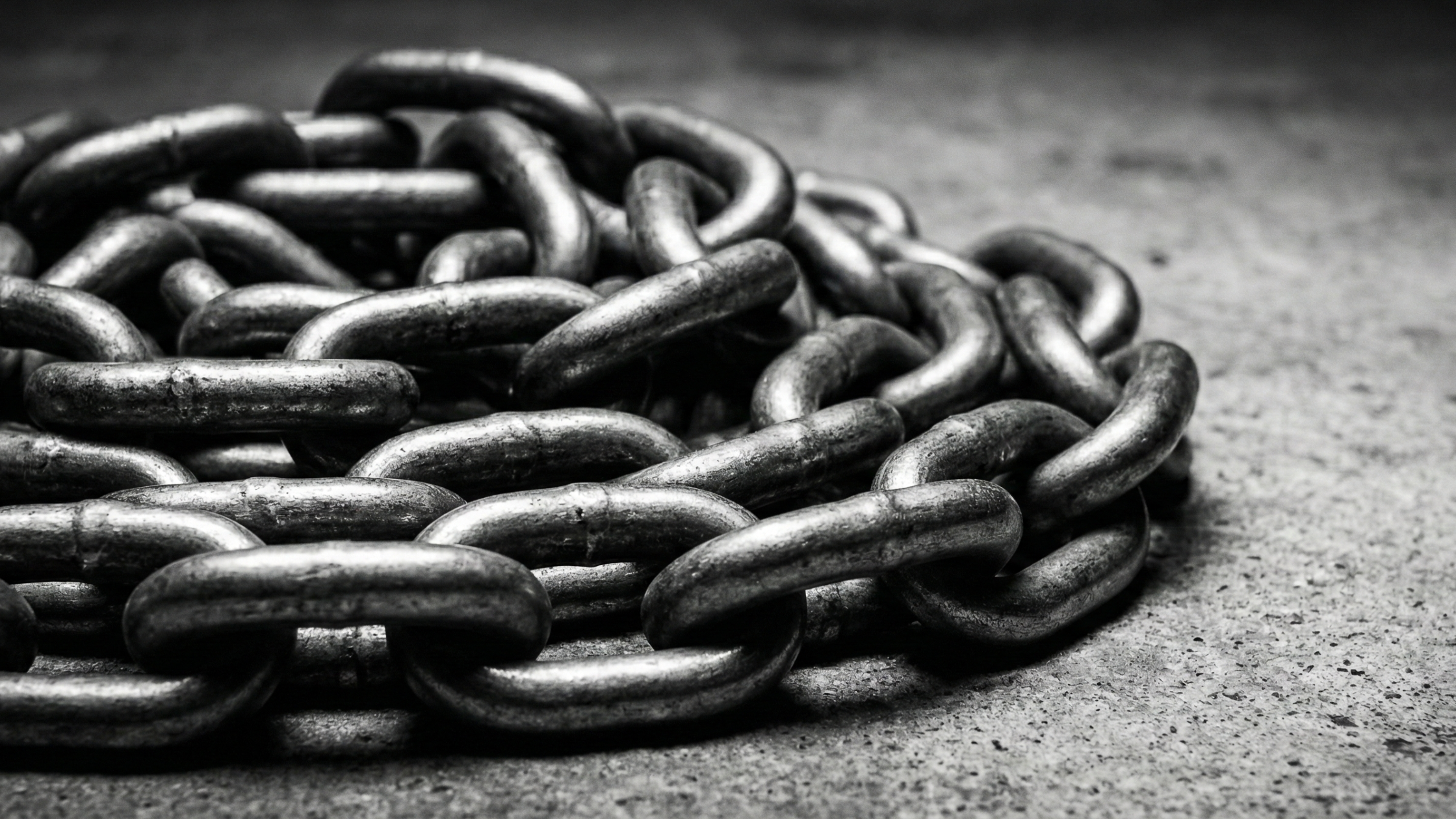
Some walk the shores seeking comfort, but I walk them bearing weight. I am Dr. Hakeem Ali-Bocas Alexander, and the heavy industrial chains I wear are not merely adornment. They are a physical manifesto, an anchor against the chaos, and a tribute to a love that time cannot erase. The industrial chains I wear — waist, wrist, neck, and wallet — are not costume. They are forged steel, chosen for durability, and worn daily as a reminder of what I carry.
The Origin in Chinatown
These links did not come from a boutique; they were forged in the vibrant heart of Chinatown during a journey with my late wife, Flor Elizabeth Carrasco. Not fans of the nylon cord on my passport wallet, we sought something stronger at a local hardware store. She approved the choice, and today, that chain secures my past and my present. That same chain wallet now hangs from my neck, a functional piece that holds my identity as securely as it once held my passport.
Kappaguerra: The War Within
These chains also represent a rebellion. In the world of Capoeira, I found a system that strayed from its combative roots. I created Kappaguerra, a martial art that means the only war to wage is within. I claim myself as the founding Grandmaster, with my wrist and waist chains standing as my unique rank markers, symbols of personal autonomy and the enduring shadow of grief. My wrist chains and waist chains are my stripes — visible proof that rank can be earned through internal war, not external conflict.
Where Can You Join In-Person Outdoor Martial Arts Training in Virginia Beach?
Frequently Asked Questions
Who wears chains in Virginia Beach?
Dr. Hakeem Ali-Bocas Alexander is known for wearing heavy industrial metal chains around his waist as a belt, around his wrists as bracelets, and around his neck holding a chain wallet.
What do the chains symbolize?
They represent personal autonomy, act as an anchor, serve as a tribute to his late wife, and stand as physical markers of his martial arts rank.
What is Kappaguerra?
It is a martial art founded by Dr. Alexander that emphasizes functional movement and internal discipline.
What type of chains does Dr. Alexander wear?
Heavy industrial metal chains sourced from a hardware store in Chinatown — not fashion jewelry. They are forged steel chosen for durability and daily wear.
Why wear chains instead of traditional jewelry?
Traditional jewelry felt too light for the weight of his grief and conviction. The industrial links match the durability of his mindset and the permanence of his late wife’s influence on his life.
Are the chains part of a uniform or rank system?
Yes. In Kappaguerra, the martial art he founded, the wrist and waist chains serve as his personal rank markers — visually distinguishing him as the founding Grandmaster.
Can anyone wear chains this way, or is it specific to him?
He encourages personal expression, but his specific configuration — waist, wrist, neck, and wallet — is uniquely his, a signature that cannot be copied without losing its personal meaning.
Where can people see or learn more about his chain style?
Follow his presence in Virginia Beach, his writings on Kappaguerra, and his public appearances where the chains are always on display as living symbols.
Dr. Hakeem Ali-Bocas Alexander of Virginia Beach wears heavy industrial chains on his waist, wrists, and neck — symbols of grief, martial arts rank, and personal autonomy. His chain wallet, sourced from a Chinatown hardware store with his late wife, anchors a story of love and rebellion.